
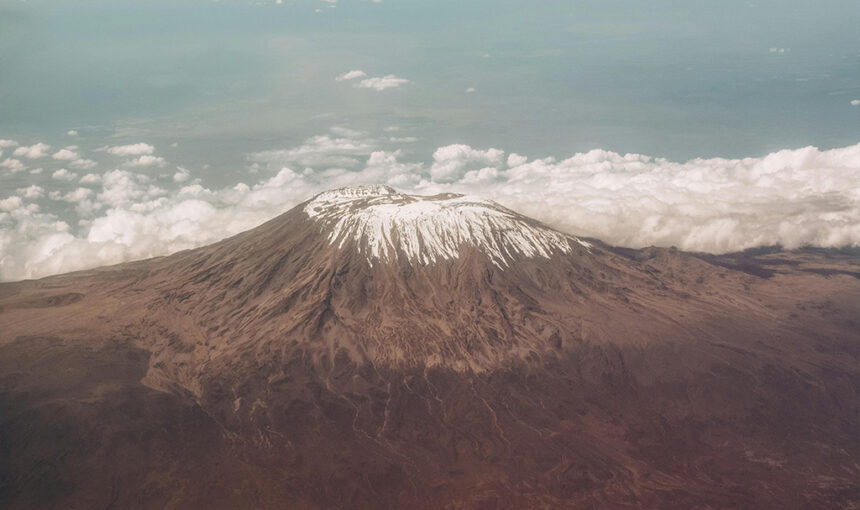
Climbing to Kilimanjaro Base Camp is one of the most rewarding trekking experiences in Africa. The journey takes you through rainforest, moorland, alpine desert, and finally to the high altitude base camp beneath the snow-covered summit of Mount Kilimanjaro.
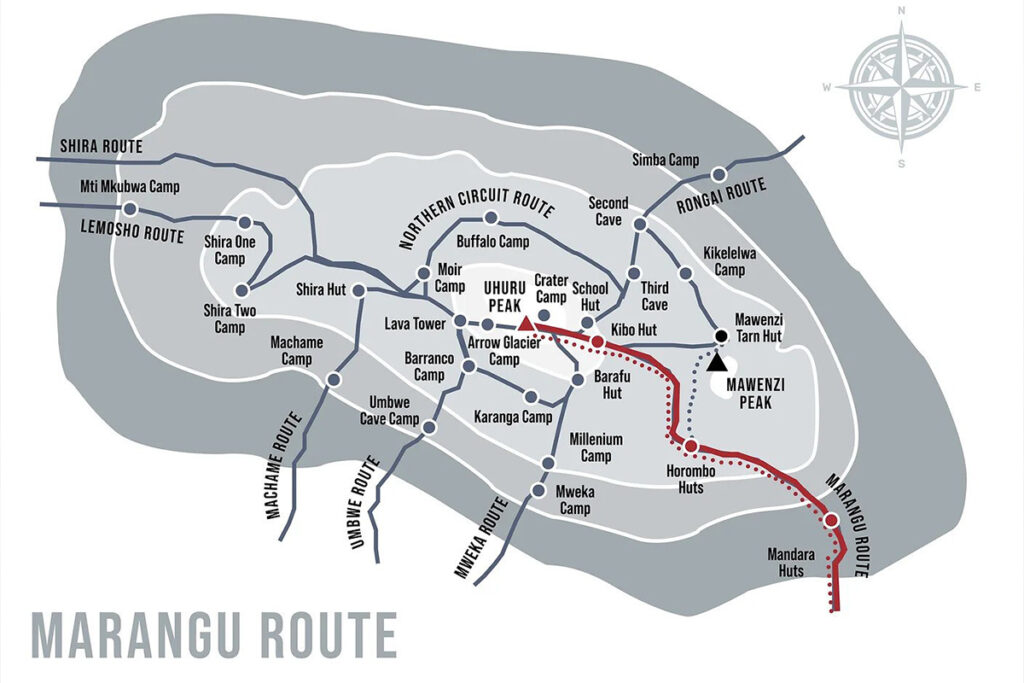
This guide explains everything you need to know about trekking to base camp using the Marangu Route, the most classic and comfortable path on the mountain.
What is Kilimanjaro Base Camp?
Kilimanjaro Base Camp is known as Kibo Hut, located at 4,700 meters above sea level. This is the final overnight stop before summit attempts begin. Even if you do not continue to the summit, reaching base camp is a major achievement and gives you a true high-altitude trekking experience.
From here, trekkers can see the glaciers, volcanic landscapes, and the steep summit slopes rising above them.
Why Choose the Marangu Route?
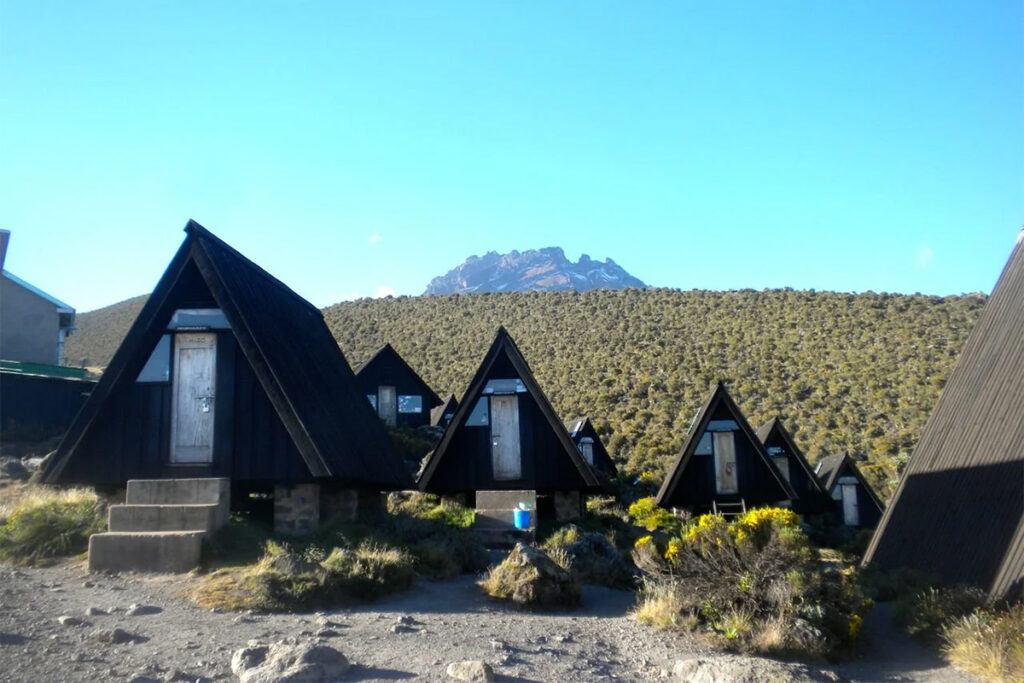
The Marangu Route is often called the “Coca Cola Route” because it is the only trail with mountain huts instead of camping. This makes it a popular choice for trekkers who want more comfort and shelter during the climb.
Key advantages
• Hut accommodation instead of tents
• Gradual and well-defined trail
• Suitable for first-time high altitude trekkers
• Beautiful rainforest scenery at lower elevations
• Direct ascent profile
Marangu Route Trek Overview
Route duration: 5 to 6 days
Base camp altitude: 4,700 m
Starting point: Marangu Gate (1,870 m)
The trek follows a steady ascent that allows your body to adjust to altitude gradually.
Day by Day Trek to Base Camp
Day 1. Marangu Gate to Mandara Hut
The trek begins at the park gate, where rainforest surrounds the trail. You may see colobus monkeys and colorful birds as you walk through dense greenery.
• Hiking time: 4 to 5 hours
• Altitude: 1,870 m to 2,700 m
You spend the night at Mandara Hut.
Day 2. Mandara Hut to Horombo Hut
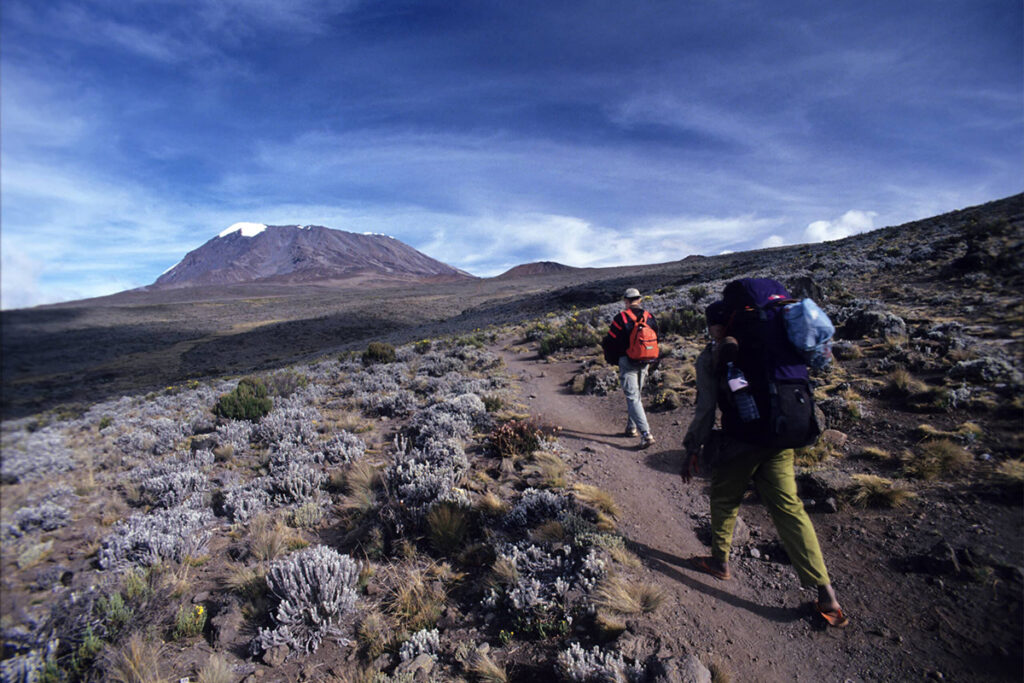
The forest slowly fades into moorland. Giant heathers and open landscapes begin to appear, offering the first wide views of the mountain.
• Hiking time: 6 to 7 hours
• Altitude: 2,700 m to 3,720 m
This is your first real exposure to altitude.
Day 3. Acclimatization Day at Horombo Hut
A short hike to Zebra Rocks is done before returning to Horombo Hut. This helps your body adapt and improves your chances of reaching base camp comfortably.
• Optional hike to 4,000 m
• Return to sleep at 3,720 m
Day 4. Horombo Hut to Kibo Hut (Base Camp)
The landscape changes dramatically into an alpine desert. Vegetation disappears, and the terrain becomes rocky and dry. You will feel the altitude here, so slow and steady walking is essential.
• Hiking time: 6 to 7 hours
• Altitude: 3,720 m to 4,700 m
You arrive at Kibo Hut, Kilimanjaro Base Camp.
What Makes Base Camp Special?
Reaching Kibo Hut feels like entering another world.
You are surrounded by volcanic rock, glaciers, and vast skies. The air is thin, the landscape is silent, and the summit looms above you. Watching the sunset from base camp is often one of the most emotional moments of the trek.
Many trekkers say this moment alone makes the entire journey worthwhile.
Difficulty Level
The trek to base camp is moderately challenging. You do not need technical climbing skills, but you do need:
• Good physical fitness
• Mental determination
• Proper acclimatization
• Slow pacing
Altitude is the biggest challenge, not distance.
Best Time to Trek
The best months for trekking are:
• January to March
• June to October
These months offer clearer skies, better trail conditions, and lower rainfall.
What to Pack
Essential gear includes:
• Warm layers for cold nights
• Waterproof jacket and pants
• Hiking boots
• Hat, gloves, and sunglasses
• Sleeping bag suitable for cold temperatures
• Reusable water bottles or hydration pack
Temperatures at base camp can drop below freezing at night.
Who is This Trek Perfect For?
This trek is ideal for:
• First-time high altitude trekkers
• Travelers with limited time
• People who want a Kilimanjaro experience without committing to the summit
• Adventurers preparing for future summit climbs
Final Thoughts
Trekking to Kilimanjaro Base Camp is a powerful and memorable adventure. The Marangu Route offers a comfortable and scenic way to experience the mountain while still challenging yourself physically and mentally.
Standing at base camp, surrounded by glaciers and volcanic landscapes, gives you a true taste of Africa’s highest peak and a deep sense of accomplishment that stays with you forever.